
Core Rally Mechanics
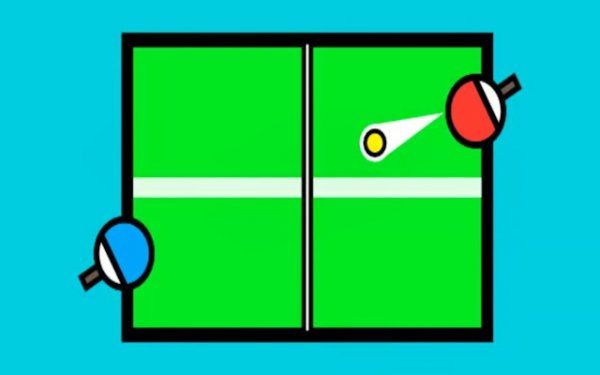
The central action revolves around a single ball moving between two paddles. Each player must anticipate the ball's trajectory and position their paddle to intercept it. Successful returns depend on reading the angle and speed of incoming shots. The game rewards players who can quickly adjust their paddle's position and time their swings effectively. Rallies can become intense as both players try to outmaneuver each other, with each successful hit adding to the pressure.
Match Structure & Scoring
A standard match consists of multiple points. A point is awarded when one player fails to return the ball legally, either by missing it entirely or by hitting it out of bounds. The first player to reach a set number of points wins the match. This simple scoring system keeps each game focused and competitive, allowing for quick turnaround between matches. Players can engage in best-of-three or best-of-five formats for longer sessions.
Single-Player Training
For those looking to improve their skills, a single-player mode offers practice against an AI opponent. The AI adjusts its play style based on the player's performance, providing a consistent challenge. This mode is ideal for learning the timing of different shot angles and building muscle memory. Players can experiment with various strategies without the pressure of a live opponent, making it a valuable tool for skill development.
Local Two-Player Competition
The local multiplayer mode allows two players to compete on the same screen using separate controls. This setup is perfect for friendly matches at home or on the go. Each player must rely on their own reflexes and strategic thinking to outplay the other. The head-to-head format encourages quick thinking and adaptability, as players must read their opponent's movements and adjust their own tactics in real time.
Visual & Feedback Design
The 2D graphics keep the focus squarely on the gameplay. The ball and paddles are clearly visible against a simple background, ensuring that players can track the action without distraction. Visual cues, such as the ball's trail or paddle movement, provide immediate feedback on each shot. This clean design helps maintain a fast pace and reduces visual clutter, allowing players to concentrate on their timing and positioning.
Progression & Challenge
As players improve, the game may increase the speed of rallies or introduce more complex shot patterns. This gradual difficulty curve ensures that the game remains engaging over time. Players who master the basics can then focus on advanced techniques, such as placing shots to specific areas of the table. The lack of complicated menus or upgrades keeps the experience pure, with the challenge coming solely from the opponent and the physics of the ball.






Comments
0 comments