
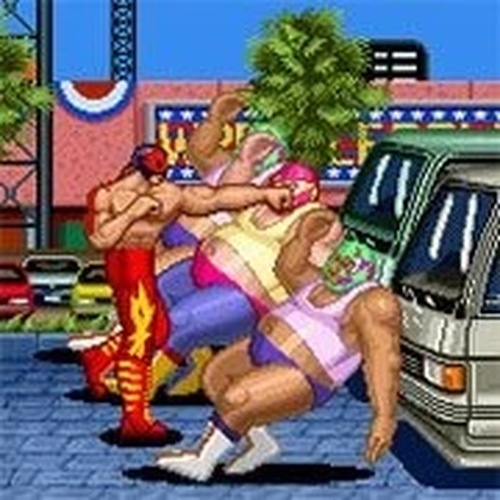
Ring Roster & Character Flow
Pixel Ring Brawlers features a selection of wrestlers, each designed with a distinct fighting style. The game introduces a character-swapping system that activates after certain missions. When you rescue a new fighter, you can pause the action and select them for the next stage. This encourages players to experiment with different approaches, as each wrestler handles situations differently. The roster is not just cosmetic; each character has unique strengths that can change how you approach a level.
Cooperative Tag Team Action
One of the standout features is the two-player cooperative mode. Friends can team up locally, each controlling their own wrestler. This mode allows for coordinated strategies, such as flanking opponents or setting up chain moves. The cooperative experience is designed to be accessible, so even players new to the genre can jump in and contribute. The game does not require complex communication, making it a good choice for casual play sessions with a friend.
Visual & Audio Nostalgia
The game adopts a vibrant pixel art style that evokes the look of classic arcade cabinets. Colors are bright and distinct, making each character and stage easy to read during fast action. The soundtrack features upbeat, chiptune-inspired tracks that match the energetic pace of the matches. Sound effects are crisp and clear, providing clear audio feedback for hits, special moves, and stage transitions. This combination creates an immersive retro atmosphere without relying on modern graphics.
Progression & Replay Value
Pixel Ring Brawlers structures its campaign around a series of stages, each presenting new opponents and challenges. As players advance, they encounter opportunities to rescue additional wrestlers, expanding the available roster. The character-swapping mechanic is the main driver of replayability, as players may want to revisit earlier stages with a different fighter to see how the experience changes. The game is designed for short sessions, with each stage lasting a few minutes, making it easy to pick up and put down.
Controls & Accessibility
The control scheme is intentionally straightforward. Movement is handled with a directional input, while attacks are mapped to a couple of action buttons. Special moves are performed by combining button presses, but the game does not require complex combos to be effective. This makes the game accessible to younger players or those who are not familiar with fighting games. The simple controls do not sacrifice depth, as timing and positioning still matter during matches.





Comments
0 comments